- All
- Product Name
- Product Keyword
- Product Model
- Product Summary
- Product Description
- Multi Field Search
Languages
Views: 1567 Author: Site Editor Publish Time: 2025-12-02 Origin: Site


Content Menu
● Common Clay Bar Mistakes Beginners Must Avoid
● Top Clay Bar Mistakes Beginners Make
>> 1. Not Using Enough Lubrication
>> 2. Claying on a Dirty or Unwashed Car
>> 3. Using the Wrong Clay Grade (Too Aggressive or Too Mild)
>> 4. Claying Under Direct Sunlight or on Hot Paint
>> 5. Pressing Too Hard on the Clay
>> 6. Reusing a Dropped Clay Bar
>> 7. Not Folding and Re-Kneading the Clay
>> 8. Using Clay Bar as a Replacement for Polishing
>> 9. Not Drying the Paint Before Applying Wax or Coating
>> 10. Not Protecting the Paint After Claying
● Why Beginners Should Use Brilliachem Clay Bars
>> ✔ Professional Clay Lubricants
>> ✔ Long-Lasting, Non-Sticky Formula
● FAQ
>> 1. Can a clay bar damage paint?
>> 2. Should beginners use fine or medium clay?
>> 3. What if the clay bar becomes dirty quickly?
>> 4. How often should beginners clay bar a car?
>> 5. Do you need to wax after claying?
Clay barring is one of the most effective ways to remove bonded contaminants and restore paint smoothness.
But many beginners make mistakes that cause swirl marks, scratches, wasted time, or poor results.
This guide breaks down the most common clay bar mistakes, how to avoid them, and why using professional-grade products like Brilliachem clay bars and lubricants ensures safer, smoother detailing.
Brilliachem is China’s largest automotive detailing clay bar manufacturer, supplying millions of clay bars to global brands with SGS, ISO, BSCI-certified production.
This is the #1 mistake worldwide.
Not enough lubrication causes:
Dragging
Micro-scratches
Streaking
Torn clay
Solution:
Use a generous amount of Brilliachem Clay Lube or detailing spray.
Clay should glide like it's floating on water.
Clay bars are made to remove bonded contaminants, not loose dirt.
Claying a dirty surface leads to:
Embedded grit
Deep scratches
Clay contamination
Solution:
Always wash and dry your car first.
Beginners often choose the wrong clay type:
Heavy clay = too aggressive for mild contamination
Fine clay = not enough cleaning power for rough paint
Solution:
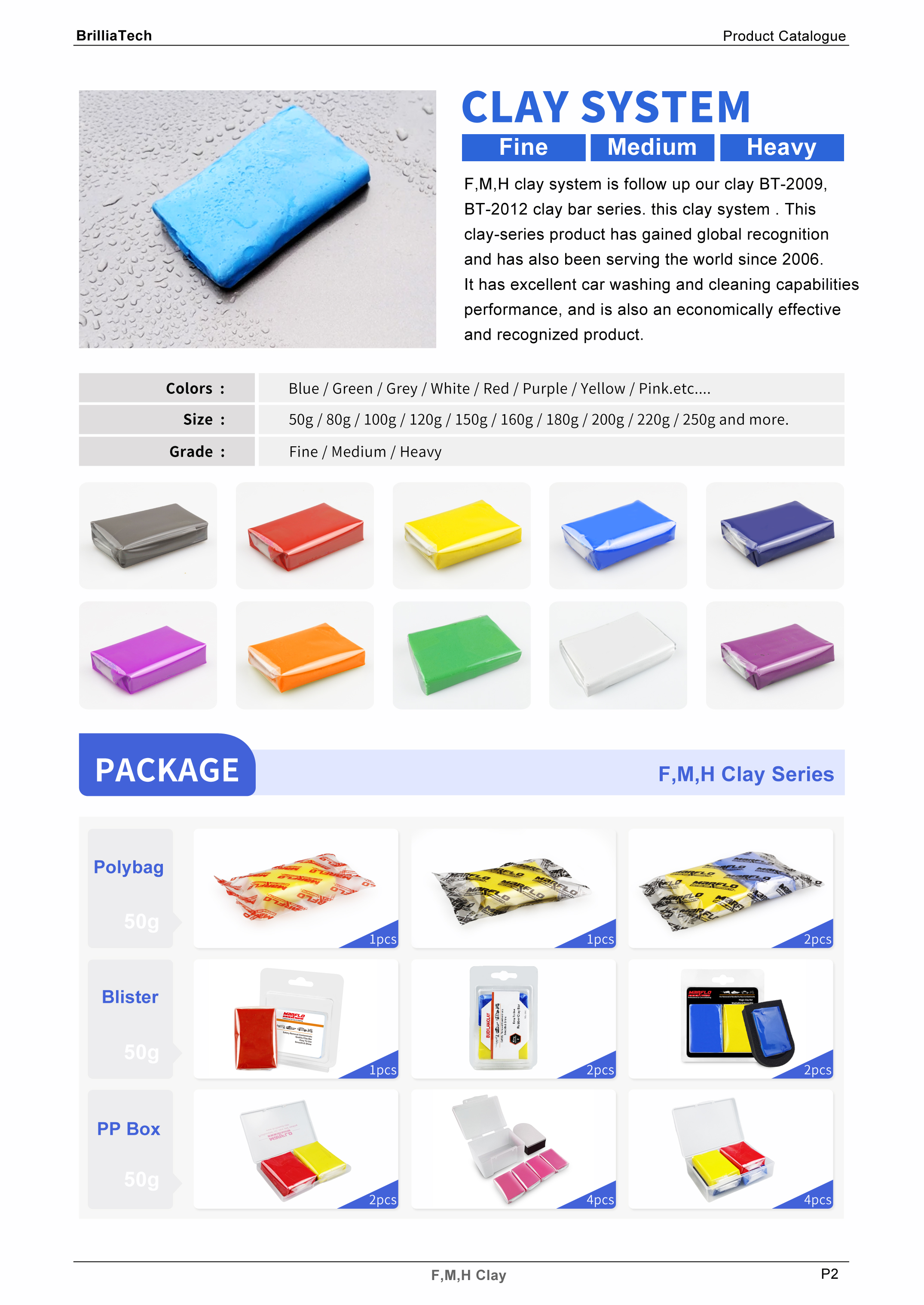
Use Brilliachem’s graded clay system:
Fine Clay Bar: New cars, light fallout
Medium Clay Bar: Daily drivers, mild contamination
Heavy Clay Bar: Overspray, tar, industrial fallout
Heat makes lubrication evaporate faster, increasing the risk of scratches.
Solution:
Clay only on:
Cool paint
Shaded areas
Early morning or evening
Clay should never require strength.
Hard pressure can mar soft clear coat.
Solution:
Use light fingertip pressure and keep the clay flat.
If you drop a clay bar, it instantly picks up debris—small stones, grit, sand.
Reusing it will scratch your paint.
Solution:
Throw it away immediately or cut off the contaminated part if possible.
A dirty clay surface causes micro-scratches.
Solution:
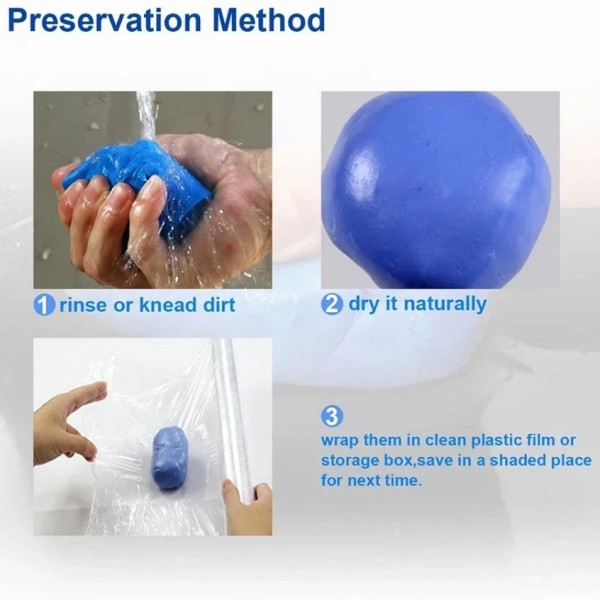
Fold and re-knead the clay every few minutes to expose a clean side.
Clay removes contamination, not scratches.
Beginners confuse clay with polish, expecting it to fix swirl marks.
Truth:
Clay does not remove swirls, oxidation, or paint defects.
Polishing does.
Applying wax or ceramic coating on a wet surface reduces adhesion.
Solution:
After claying, wipe the panel dry with a microfiber towel.
Clay leaves the paint bare and exposed.
Solution:
Apply one of these immediately:
Wax
Sealant
Ceramic coating
Protection locks in the smooth finish.
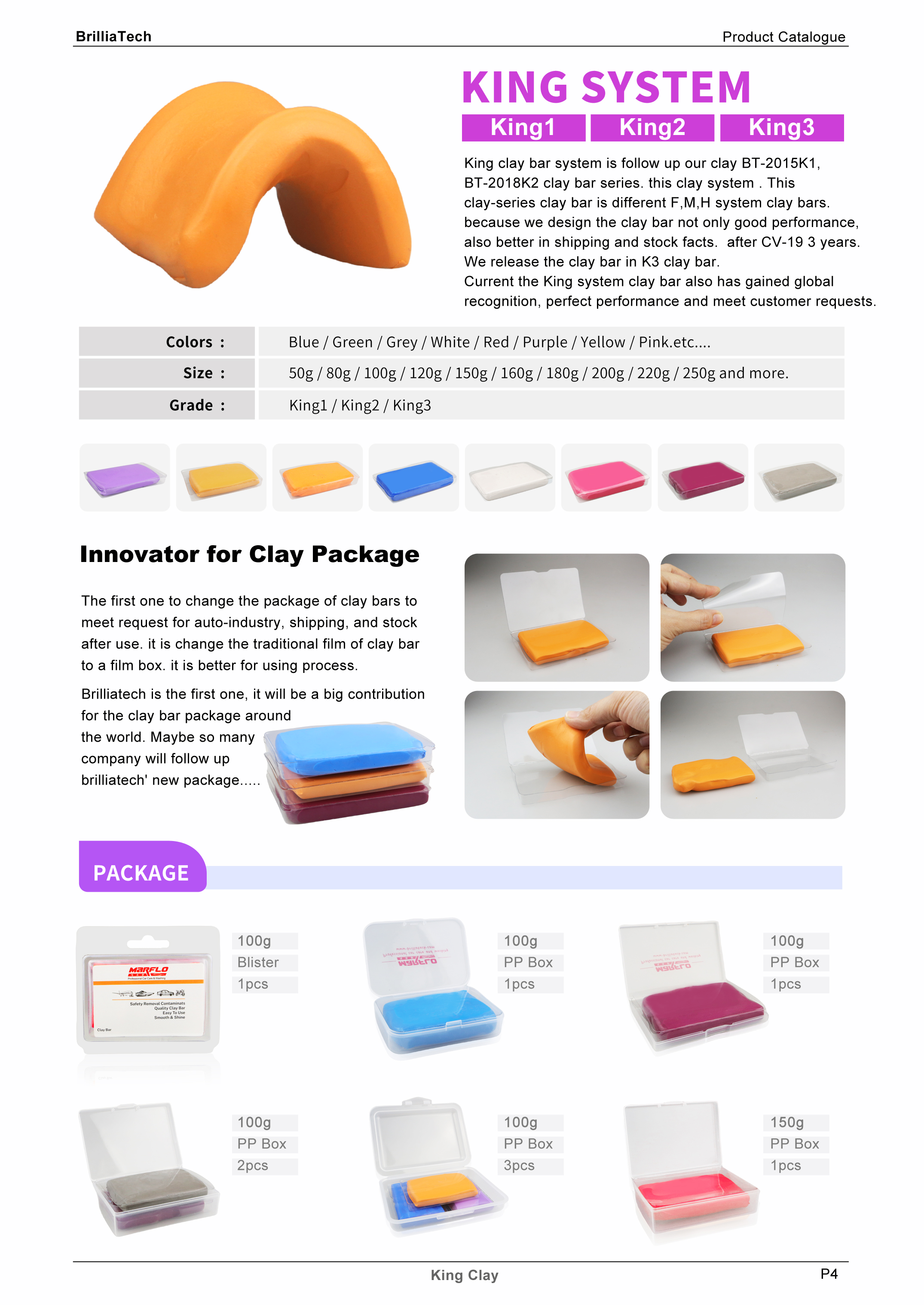
Brilliachem is one of China’s largest and most advanced clay bar manufacturers, producing more than 10 million clay bars yearly.
World-class quality control and safety.
Fine, Medium, Heavy, Clay Mitts, Clay Towels.
Custom packaging and logo printing for brands.
Formulated specifically to reduce friction.
Doesn’t crumble, streak, or break apart during use.
Yes—if you use too little lubrication, too much pressure, or the wrong grade.
Fine clay is safest for beginners.
Fold and knead it to expose a clean surface.
Every 3–6 months depending on driving conditions.
Yes—claying removes contaminants AND protection. Waxing is essential.