
- All
- Product Name
- Product Keyword
- Product Model
- Product Summary
- Product Description
- Multi Field Search
Languages
Views: 1432 Author: Site Editor Publish Time: 2025-12-10 Origin: Site


Content Menu
● Car Still Feels Rough After Claying — Why? (2026 Expert Explanation)
● Quick Answer: Why Paint Feels Rough After Claying
● Detailed Reasons Why Your Car Feels Rough After Claying
>> 1) Iron Contamination Still in the Paint
>> 2) Water Spots / Mineral Deposits
>> 3) Tar, Asphalt, Glue & Road Film
>> 4) You Used a Fine-Grade Clay on Heavy Contamination
>> 5) Lack of Lubrication Prevented Proper Claying
>> 6) Paint Oxidation or Clear-Coat Texture
● How to Make the Paint Smooth After Claying (The Correct Method)
>> Step 1 — Chemical Decontamination
>> Step 2 — Mechanical Decontamination (Claying)
>> Step 3 — Light Polishing (Optional but Recommended)
● FAQ
>> Is it normal for paint to still feel rough after claying?
>> Should you clay again if the paint is still rough?
>> Will iron remover make the paint smoother?
>> Can clay fix oxidation or clear-coat texture?
Claying is designed to remove bonded contaminants and leave paint feeling smooth.
So when a car still feels rough, bumpy, or textured after claying, something is still bonded to the surface—or the wrong clay method was used.
This guide explains why paint still feels rough after claying, what contaminants remain, and how to fix it safely.
Your car may still feel rough after claying because of one or more of these:
Iron contamination still embedded in paint
Mineral deposits or water spots not removed by clay
Tar, asphalt, or adhesive residues
Using too mild (fine) clay for heavy contamination
Clay was not lubricated enough and skipped bonded contaminants
Paint oxidation or clear-coat texture (not contamination)
Claying alone cannot remove all types of contamination—especially chemical or deep-bonded contaminants.
Clay removes physical contaminants, but iron fallout is chemical and embedded inside clear coat.
Signs of iron contamination:
tiny rough dots
orange or purple spots
sandpaper-like areas
Solution:
Use an iron remover before or after claying.
(Sprays such as Iron Fallout Remover dissolve embedded metallic particles.)
Hard water minerals bond tightly to the surface.
Clay cannot remove these crystalline deposits.
Feels like: tiny bumps or chalky roughness
Solution:
Use a water spot remover (acid-based) to dissolve minerals.
Sticky tar or adhesive can smear during claying instead of being removed.
Clay cannot cut through:
tar
road film
tree sap
heavy bug residue
Solution:
Use a tar remover / solvent before claying.
Fine clay bars or clay mitts are gentle and safe—but not strong enough for:
neglected cars
winter fallout
industrial zones
overspray
bonded tar or rail dust
Solution:
Upgrade to a medium-grade clay for heavy contamination.
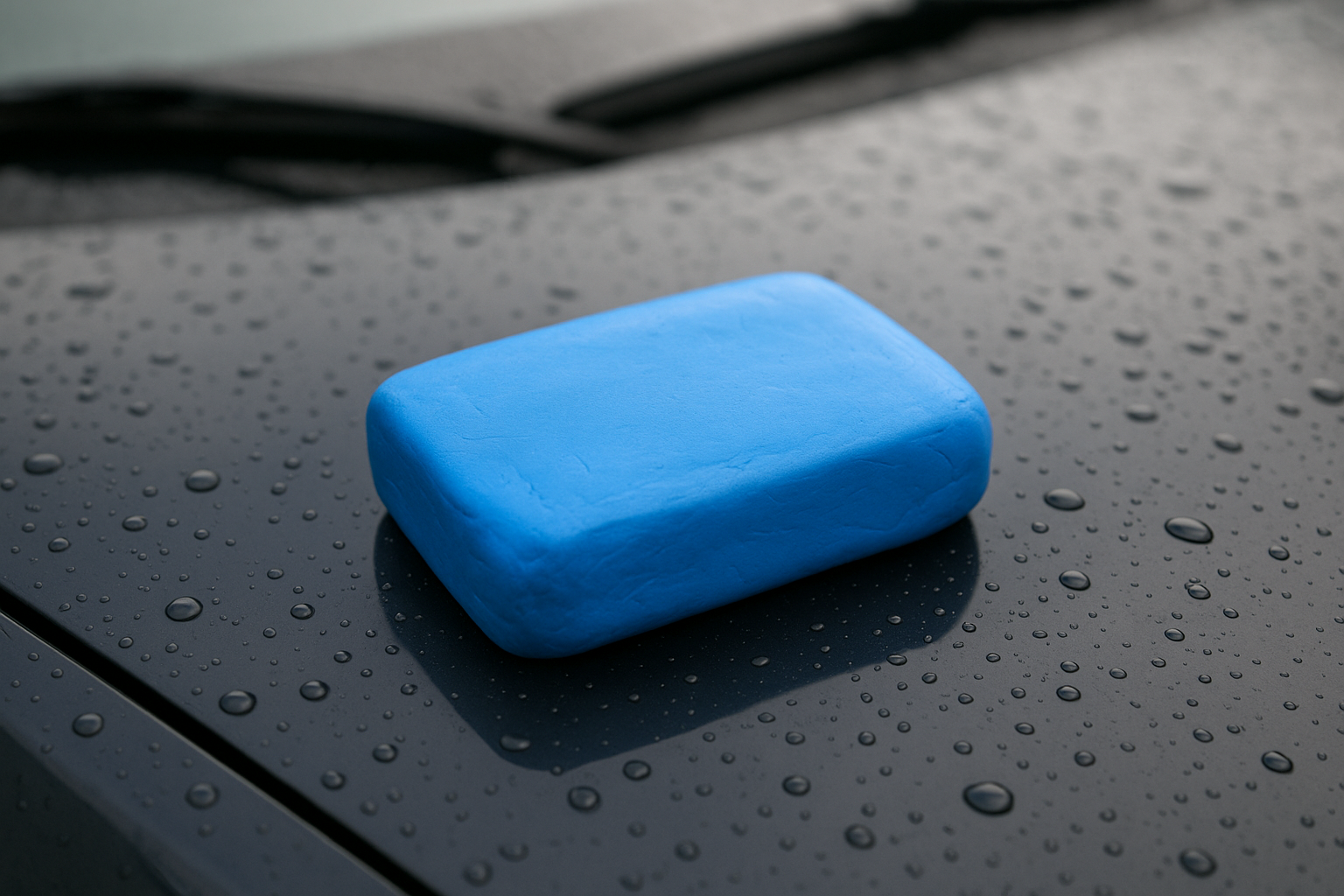
Insufficient lubrication causes clay to:
skip over contaminants
drag instead of lifting
miss deep particles
Solution:
Use plenty of clay lubricant or clay mitt spray.
Not all roughness is contamination.
If paint is oxidized or has orange peel texture, claying won’t fix it.
Solution:
light polishing (for oxidation)
compounding (for texture improvement)
Use in order:
Iron remover (removes embedded metal)
Tar remover (removes asphalt & glue)
Water spot remover (removes minerals)
This removes contaminants clay cannot touch.
Choose:
Fine clay → coated cars / new cars
Medium clay → older cars / heavy contamination
Use plenty of lubrication.
If paint still feels:
textured
dull
sticky
Light polishing restores:
smoothness
gloss
clarity
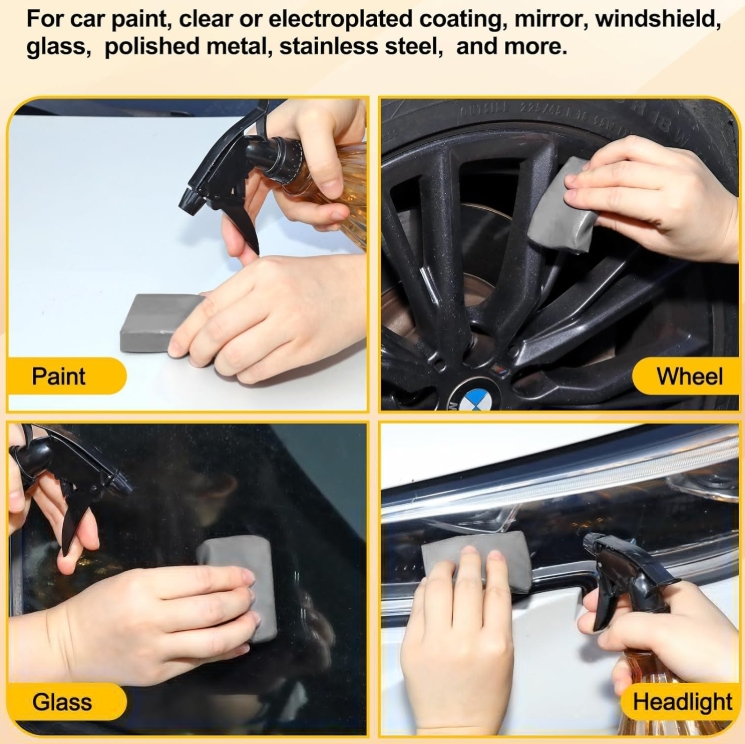
Yes. Clay removes physical contaminants but not chemical contamination like iron, tar, or minerals.
Only after chemical decontamination.
Overclaying can cause marring.
Yes. Iron fallout is one of the biggest causes of post-clay roughness.
No. Only polishing or compounding can correct surface defects.
If your car still feels rough after claying, it doesn’t mean the clay failed—
it means other contaminants remain.
To achieve glass-smooth paint:
Remove iron
Remove tar
Remove minerals
Use correct clay grade
Polish if needed
This complete decontamination approach guarantees the smoothest finish possible.


