
- All
- Product Name
- Product Keyword
- Product Model
- Product Summary
- Product Description
- Multi Field Search
Languages
Views: 1564 Author: Site Editor Publish Time: 2025-12-09 Origin: Site


Content Menu
● Clay Bar Sticking to Paint — How to Fix It (2026 Expert Detailing Guide)
● Why Clay Bars Stick to Paint
>> 1) Insufficient Lubrication (most common)
>> 2) Paint or surface is too warm
>> 3) The clay is too soft / low quality
● How to Fix Clay Bar Sticking Immediately
>> ✅ 5) Switch to a Higher-Quality Clay
● How to Fix Paint After Clay Sticks
● How to Prevent Clay Sticking Forever
>> ✅ 4) Replace Clay When Dirty
● FAQ
>> Why does my clay bar stick to paint?
>> How do you stop clay from sticking?
>> Is clay bar sticking normal?
>> Can ceramic coating cause clay to stick?
A clay bar sticking to paint is one of the most common issues beginners face when detailing.
It can cause:
sudden tearing
surface marring
paint dulling
frustration
But don’t worry — clay sticking is easy to fix, and it almost always comes down to technique or environmental conditions.
This guide explains why it happens, how to fix it, and how to avoid it in the future.
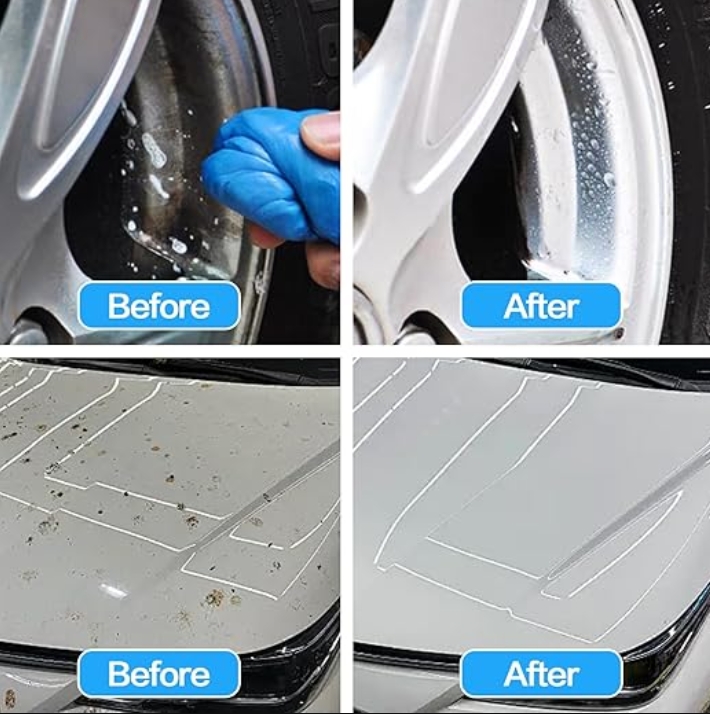
Clay sticking happens for three main reasons:
Clay cannot glide without lubrication.
When lubrication is low → friction spikes → clay grabs paint → clay tears.
When paint is hot:
clear coat softens
polymers become sticky
clay bond increases dramatically
This is common on:
black cars
sunny days
metal parts (motorcycles, aircraft)
Low-quality clay:
has poor polymer stability
gets sticky easily
tears faster
leaves residue
High-quality synthetic clay solves this problem.
Use any of these:
dedicated clay lubricant
car shampoo + water
quick detailer (QD)
waterless wash
You should always see a thin wet film on the paint.
If the paint feels warm:
Move to shade
Allow cooling for 10–20 minutes
Never clay in direct sunlight
Squeeze and fold the clay until:
surface feels even
no dirt is embedded
texture is smooth
This restores glide.
Clay should almost float:
imagine spreading butter
apply only hand weight
never press hard
Most sticking issues come from too much pressure.
Signs your clay is poor:
tears instantly
sticks even when lubricated
leaves residue
scratches paint
High-performance polymer clay solves these.
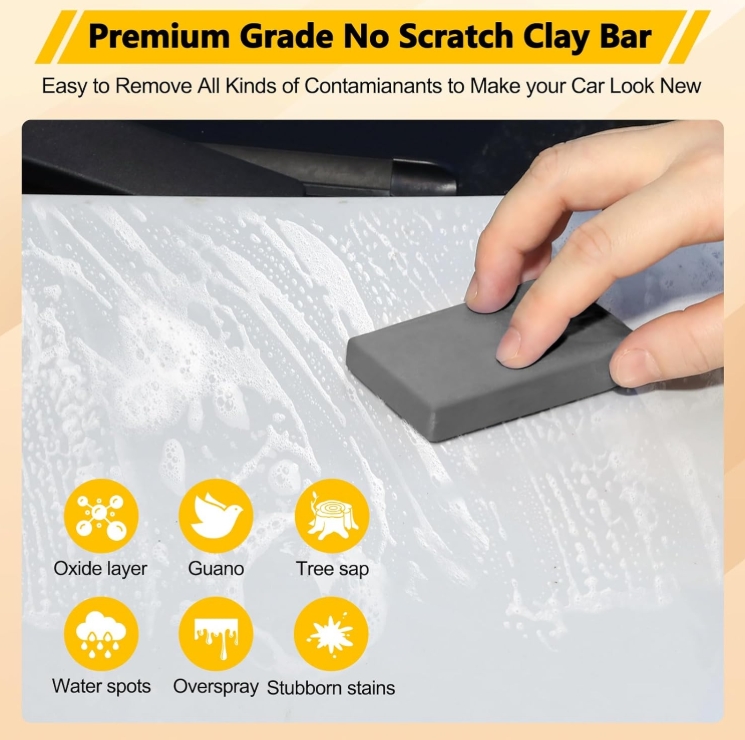
If sticking already caused marring:
Use:
finishing polish
foam pad
low speed
Usually removes the haze 100%.
Wax / sealant / ceramic
reduces future sticking significantly.
This is rule #1.
Even a few degrees matter.
Fine → maintenance & soft clear coat
Medium → normal contamination
Heavy → severe contamination only
Heavy grade sticks easier.
When it gets:
gritty
colored
torn
Replace immediately.
matte paint (may shine it)
bare metal
chrome
extremely soft paint
ceramic coated surfaces with poor lubrication
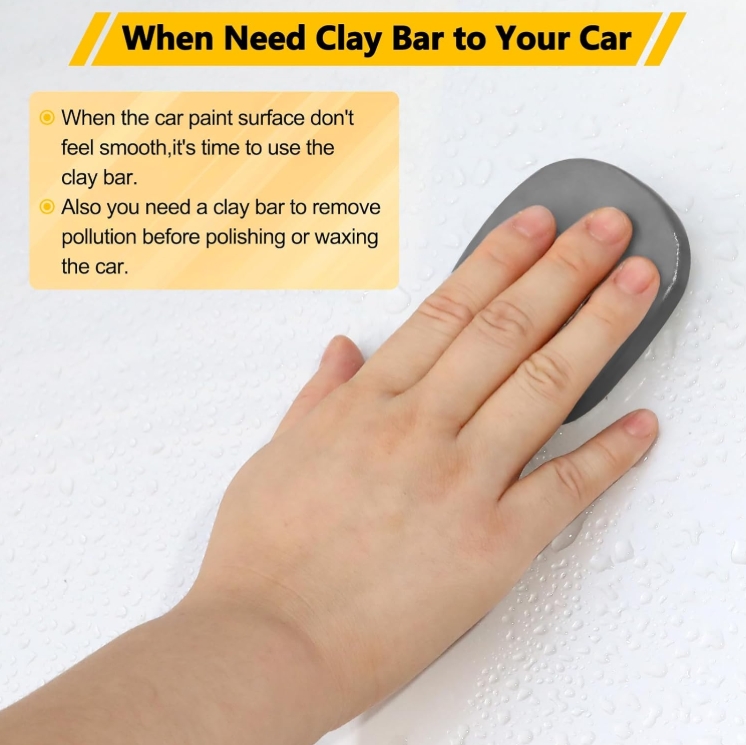
Usually due to low lubrication, hot paint, or low-quality clay.
Increase lubrication, reduce pressure, cool the surface, knead clay.
Yes, if used dry or with excessive pressure.
No — it’s a sign that technique or conditions must be corrected.
Yes, coatings can make clay glide differently — always use more lubrication.
Clay sticking to paint is not a disaster — it’s a learning moment.
Remember:
Lubricate generously
Work in shade
Use light pressure
Knead frequently
Use quality clay
Do this and you’ll enjoy:
safer detailing
smoother paint
better gloss
longer-lasting protection


